Care Management Intelligence: Healthcare’s Next Challenge Isn’t Finding Risk. It’s Allocating Intervention Capacity
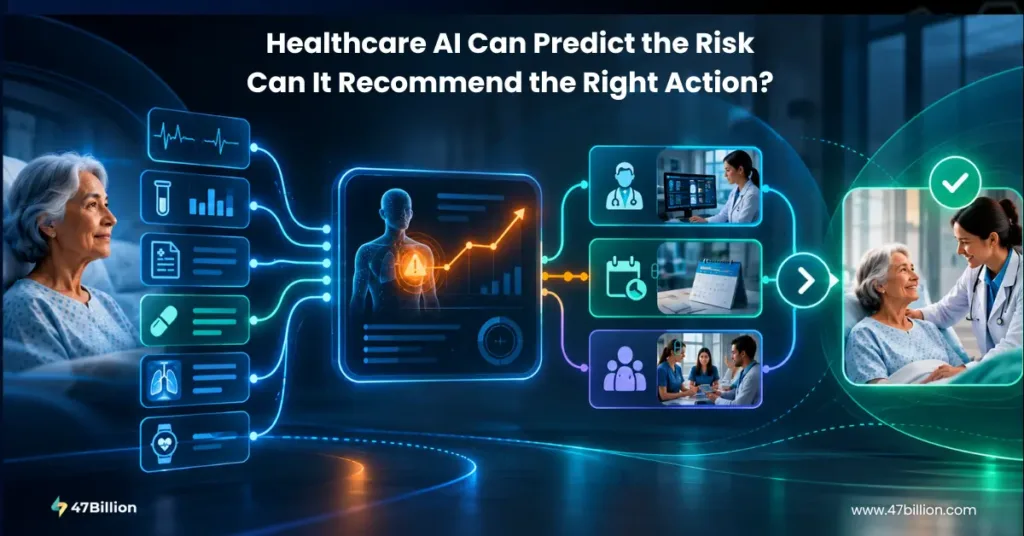
For the last decade, healthcare organizations have invested heavily in Predictive Analytics in Healthcare.
Health plans built sophisticated risk stratification models.
Population health teams implemented advanced analytics platforms.
Provider organizations invested in care gap management solutions.
Value-based care programs expanded disease management and care coordination initiatives.
The objective was clear: identify patients most likely to experience adverse outcomes before those outcomes occur.
And by most measures, the industry succeeded.
Today, a Medicare Advantage plan can predict hospitalization risk. An Accountable Care Organization can identify members likely to become high-cost patients. A health system can detect care gaps, medication adherence issues, and rising-risk populations with increasing precision.
Yet despite all this progress, healthcare continues to struggle with preventable admissions, avoidable emergency department utilization, poor chronic disease management outcomes, and rising costs.
The scale of the problem is significant:
- Up to 13% of adult hospitalizations in the U.S. are considered potentially preventable
- These preventable hospitalizations contribute to over $100 billion in annual healthcare costs
- In Medicare populations, 1 in 6 hospital admissions is preventable
Why?
Because healthcare solved the risk identification problem.
It did not solve the intervention allocation problem.
Every healthcare organization has a list of high-risk patients.
The challenge is that the list is usually far larger than the organization’s ability to act on it.
A payer may identify:
- 50,000 high-risk members
- 15,000 rising-risk members
- Thousands of members with medication adherence issues
- Thousands more with unresolved care gaps
But only have enough care management capacity to actively engage a small fraction of them.
This gap is not theoretical:
- 80% of identified at-risk members are never reached by care management programs
- Average engagement rates among high-risk populations are below 30%
At that point, healthcare stops being a predictive analytics challenge.
It becomes a resource allocation challenge.
What is Care Management Intelligence?
Care Management Intelligence is an AI-driven approach that helps healthcare organizations prioritize patient interventions based on expected clinical impact, patient engagement, operational capacity, and resource availability. Unlike traditional risk scoring, it focuses on maximizing the value of every care management interaction.
The Industry Solved Risk Identification. It Didn’t Solve Intervention Prioritization
The healthcare analytics industry has made enormous progress over the last decade.
Organizations now routinely deploy models that predict:
- Hospital admissions
- Readmissions
- Emergency department utilization
- Disease progression
- Medication adherence decline
- Chronic disease complications
Yet healthcare executives continue asking a different set of questions:
- Which patient should a care manager contact today?
- Which intervention is most likely to prevent a hospitalization?
- Which patient is most likely to engage with outreach efforts?
- Which intervention creates measurable clinical and financial impact?
- Which patients should be prioritized given limited staffing capacity?
These questions are fundamentally different from risk prediction.
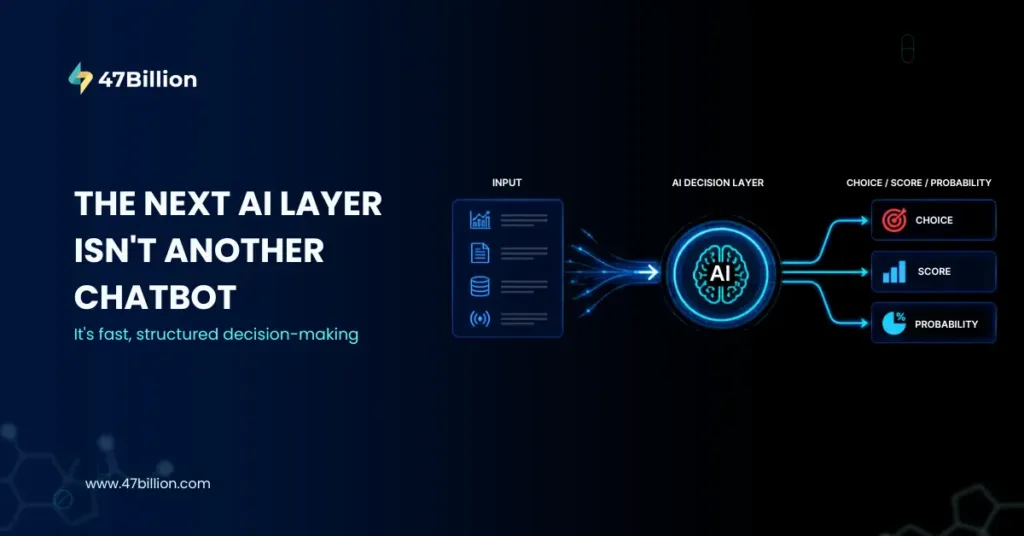
Risk prediction estimates probability.
Intervention prioritization estimates value.
And value is significantly harder to calculate.
Organizations looking to move beyond traditional predictive models should also explore how Healthcare Predictive Analytics is evolving to support more actionable, outcome-driven decision-making.
What is intervention prioritization in healthcare?
Intervention prioritization is the process of determining which patients should receive care management resources first based on expected clinical benefit, engagement likelihood, and operational constraints. It helps healthcare organizations maximize outcomes while working within limited staffing capacity.
Why Traditional Risk Scores Are Becoming Less Effective?
Most care management workflows still operate around a simple assumption:
Higher risk equals higher priority.
But real-world care management is far more complex.
Consider two patients.
Patient A
- Multiple chronic conditions
- Multiple hospitalizations in the last year
- High RAF score
- Significant social barriers
- History of missed appointments
- Low engagement with previous outreach efforts
Patient B
- Moderate risk profile
- Early signs of medication non-adherence
- Recent deterioration in diabetes control
- High engagement history
- Strong provider relationship
- Increasing probability of a preventable admission
Traditional risk models place Patient A at the top of the queue.
But from an intervention perspective, Patient B may represent a far greater opportunity.
This is not hypothetical:
- ~50% of patients with chronic conditions do not take medications as prescribed
- Medication non-adherence is linked to up to 25% of hospitalizations
- Improving adherence alone could save $100–$300 billion annually
A targeted intervention with Patient B could:
- Prevent disease progression
- Avoid hospitalization
- Improve quality metrics
- Reduce downstream costs
Not every high-risk patient creates the same intervention opportunity.
And not every intervention generates the same return.
The Hidden Cost of Misallocated Care Management Resources
Healthcare leaders often discuss workforce shortages.
What receives less attention is how efficiently available resources are utilized.
Every AI-powered care management interaction consumes valuable clinical resources.
- Care manager time
- Nurse navigator capacity
- Clinical review resources
- Social work support
- Outreach infrastructure
And those resources are more constrained than most organizations realize.
Typical care management constraints:
- A single care manager may handle 50–150 patients depending on program intensity
- In higher-touch models, active caseloads often drop to 25–35 patients
Now compare that to populations of tens of thousands of high-risk members.
This is the structural gap.
Every intervention therefore carries an opportunity cost.
And the financial stakes are significant:
- The average hospital stay in the U.S. costs ~$16,000+ per admission
- Even a small reduction in avoidable admissions can translate into millions in savings for large populations
Poor prioritization doesn’t just reduce efficiency.
It directly impacts:
- Medical Loss Ratio (MLR)
- Star Ratings
- HEDIS performance
- Cost trends
- Value-based contract outcomes
Why is operational intelligence important in care management?
Operational intelligence enables healthcare organizations to continuously evaluate patient data, prioritize interventions, and align care management resources with real-time needs. This improves decision-making, reduces alert fatigue, and supports better patient outcomes in value-based care programs.
Why Care Management Has Become an Operational Intelligence Challenge?
Historically, care management operated through periodic workflows.
But modern healthcare is continuous.
Organizations now receive signals from:
- Claims data
- EHRs
- Pharmacy systems
- Lab results
- Remote monitoring devices
The issue is no longer data scarcity in population health management.
It is signal overload.
The challenge is determining:
- Which patient requires intervention now
- Which intervention has the highest expected impact
- Which intervention is feasible given current capacity
This is not simply a reporting problem ,it is a healthcare operational intelligence challenge.
It is an operational intelligence problem.
The Shift from Risk Scores to Intervention Intelligence
The next generation of care management systems will not compete on prediction alone.
They will compete on intervention intelligence.
Traditional systems answer:
Who is high risk?
Intervention intelligence answers:
- Who is most likely to benefit?
- What intervention should occur?
- When should it occur?
- What is the expected clinical and financial return?
A useful way to think about this shift:
Traditional Model:
Risk Score → Outreach → Hope for Impact
Intervention Intelligence Model:
Expected Impact → Capacity Fit → Targeted Intervention → Measured Outcome
This is the move from probability to value.
Why Predictive Analytics Alone Doesn’t Improve Outcomes?
Many healthcare AI initiatives fail for a simple reason:
They stop at prediction.
The typical workflow:
- Risk score generated
- Alert created
- Report distributed
Then nothing happens.
Or too much happens – leading to:
- Alert fatigue
- Workflow overload
- Missed high-impact opportunities
This is especially problematic in engagement:
- 60% of members who are contacted do not follow through on care plans
Prediction without execution does not create value.
Execution requires prioritization.
Enter Care Management Intelligence
The next evolution of population health is not another predictive model.
It is Care Management Intelligence.
At its core is a new metric:
Expected Intervention Value (EIV)
A simple way to conceptualize it:
EIV =
(Risk Reduction Potential)
× (Probability of Engagement)
× (Intervention Effectiveness)
÷ (Resource Cost)
Care Management Intelligence combines:
- Predictive analytics
- Population health context
- Operational constraints
- AI-driven prioritization
- Human clinical oversight
The goal:
Maximize impact per intervention – not volume of interventions.
How does AI improve care management?
AI improves care management by analyzing patient risk, engagement probability, operational capacity, and intervention effectiveness simultaneously. This allows care teams to prioritize high-value interventions, reduce preventable admissions, improve resource utilization, and achieve better clinical and financial outcomes.
How AI Agents May Transform Care Management?
Healthcare AI agents represent the next operational layer in modern care management.
This shift is part of a broader movement toward AI Agents in Healthcare, where intelligent systems continuously support clinical operations, care coordination, and population health management.
They can continuously:
- Monitor population-level changes
- Identify emerging risks
- Score intervention opportunities based on value
- Dynamically reprioritize outreach queues
- Align interventions with available capacity
Instead of static lists, care managers receive:
- A ranked queue of highest-value actions
- Updated continuously based on real-world changes
The shift is profound:
Care managers move from searching → to intervening.
The Future of Care Management Intelligence Is Capacity Optimization
The next generation of care management programs will not be evaluated based on activity.
They will be evaluated based on outcomes.
Success metrics will include:
- Intervention effectiveness
- Engagement rates
- Cost reduction
- Avoidable admissions prevented
- Resource utilization efficiency
Because healthcare’s scarcest resource is no longer data.
It is intervention capacity.
What Healthcare Leaders Should Do Next?
To begin moving toward intervention intelligence:
- Quantify care management capacity vs. high-risk population size
- Measure engagement rates and intervention success (not just outreach volume)
- Identify low-yield outreach segments
- Pilot prioritization based on intervention value – not just risk scores
- Align care management KPIs with outcomes, not activity
At 47Billion, we believe the next frontier in healthcare is Care Management Intelligence, not simply better prediction.
It is better allocation.
Specifically:
Maximizing clinical and financial impact per care manager hour.
This requires shifting from:
- Risk stratification → to capacity-aware intervention optimization
- Static workflows → to adaptive, intelligence-driven systems
By combining:
- Predictive analytics
- Operational intelligence
- AI-driven prioritization
- Agentic workflows
healthcare organizations can move from identifying risk to acting on it with precision.
For years, healthcare focused on one question:
Who is at risk?
The next decade will belong to organizations that answer a more difficult one:
Where should the next intervention occur to create the greatest clinical and financial impact?
Because in modern healthcare:
The constraint is not visibility.
The constraint is capacity.
And how that capacity is allocated will define the future of healthcare economics.