Hospitals Are No Longer Just Care Systems – They Are Operational Ecosystems
A modern hospital is not a linear system. It is a high-frequency, interdependent operational network where thousands of decisions unfold every hour across clinical, administrative, and infrastructural layers.
A single day involves continuous coordination of:
- admissions, discharges, and transfers
- ICU capacity and escalation pathways
- OR scheduling and diagnostics routing
- staffing allocation and shift balancing
- equipment readiness and utilization
- claims processing and reimbursement workflows
Despite heavy digitization, most hospitals still rely on:
- fragmented systems (EHR, LIS, RIS, ERP)
- manual coordination via calls, emails, and escalations
- retrospective dashboards rather than real-time decisioning
This fragmentation has measurable consequences:
- clinician burnout from administrative burden
- delayed patient throughput and ED congestion
- inefficient staffing and resource utilization
- rising operational costs
Globally, health systems are now turning to AI not just to digitize workflows, but to restructure how operations are coordinated in real time.
What Are AI Agents and Why Do Hospitals Need Them Now?
AI agents for hospital operations represent a shift from static automation to goal-driven, context-aware decision systems.
They can –
- Continuously observe multi-source hospital data
- Interpret operational and clinical signals
- Make contextual decisions
- Trigger and orchestrate workflows
- Collaborate with other systems and agents
Unlike traditional systems, they operate within dynamic, real-time decision loops.
Technically, AI agents act as a dynamic control layer on top of existing hospital infrastructure.
Agent Definition
An AI agent in this context can be decomposed into:
- Perception Layer
- Ingests data from:
- HL7/FHIR streams from EHR
- IoT telemetry (HL7 v2, MQTT)
- RTLS (location signals)
- Operational logs (scheduling systems)
- Implements:
- stream processing (Kafka, Flink)
- feature extraction
- State Representation
- Maintains contextual system state:
- patient state (acuity, journey stage)
- resource state (bed availability, staffing)
- system load (queue lengths, wait times)
Often implemented using:
- in-memory state stores (Redis)
- graph representations (Neo4j for relationships)
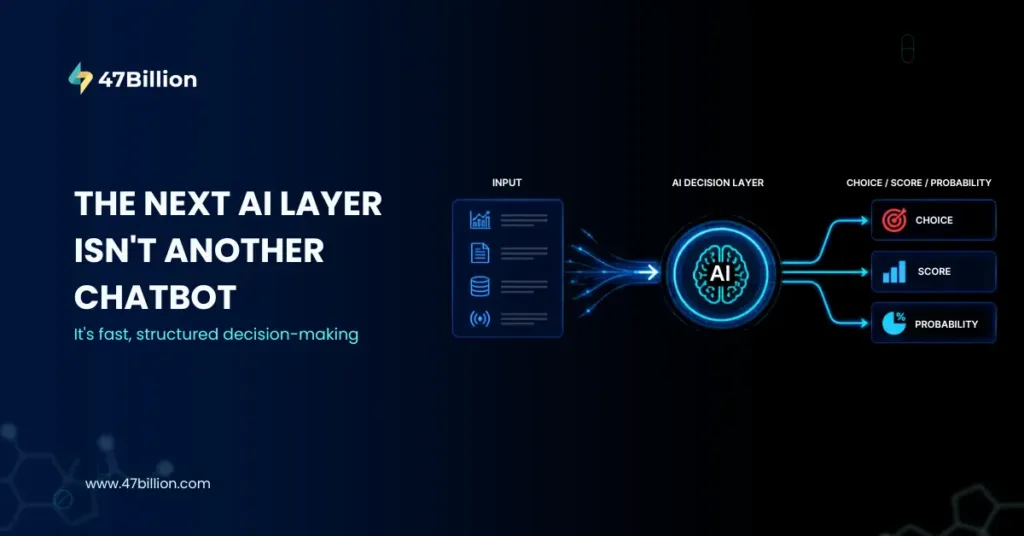
- Decision Engine
- Combines:
- predictive models (e.g., length-of-stay, admission risk)
- optimization algorithms (linear programming, RL)
- rules + policies (compliance constraints)
- Action Layer
- Triggers:
- API calls to hospital systems
- notifications (EHR alerts, mobile apps)
- workflow automation (RPA, BPM engines)
- Learning Loop
- Feedback-driven:
- outcomes – retraining
- human overrides – policy updates
Agentic AI vs Traditional Automation: What’s Actually Different?
Traditional automation:
- Rule-based
- Task-specific
- Reactive
- Limited to predefined workflows
Agentic AI:
- Context-aware
- Adaptive
- Cross-functional
- Capable of autonomous decision-making within constraints
This marks a transition from task execution – operational intelligence orchestration.
From Clinical Decision Support to Operational Execution
Healthcare AI has historically focused on:
- Clinical decision support
- Diagnostics and predictions
AI agents extend that into execution layers, where insights translate into coordinated actions across departments in real time.
How Multi-Agent Orchestration Works in Hospital Environments?
The real value of AI agents lies in multi-agent orchestration – where multiple systems collaborate across domains.
These ecosystems enable:
- Continuous data exchange
- Distributed decision-making
- Real-time coordination of workflows
Coordinating Across EHR, Staffing, Pharmacy and Operations Simultaneously
In practice:
- A predicted discharge triggers housekeeping and transport
- Staffing systems adjust shift allocations based on demand
- Pharmacy prepares medications ahead of time
- Bed management updates availability dynamically
This creates a closed-loop operational system, replacing fragmented workflows.
AI Agents for Admissions Management
Admissions represent the front door of hospital operations – and a major bottleneck.
AI agents enable:
- Real-time demand forecasting
- Intelligent patient routing
- Automated triage prioritization
Reducing Wait Times and Optimizing Bed Allocation in Real Time
Impact includes:
- Reduced ER wait times
- Improved patient flow
- Higher bed utilization
- Less overcrowding
These systems move from predicting congestion – actively preventing it.
ICU Workflow Optimization Using AI Agents
ICU environments demand rapid, high-stakes decisions.
AI agents support:
- Continuous patient monitoring
- Real-time risk assessment
- Automated escalation workflows
Sepsis Prediction, Early Warning Systems, and Automated Escalation
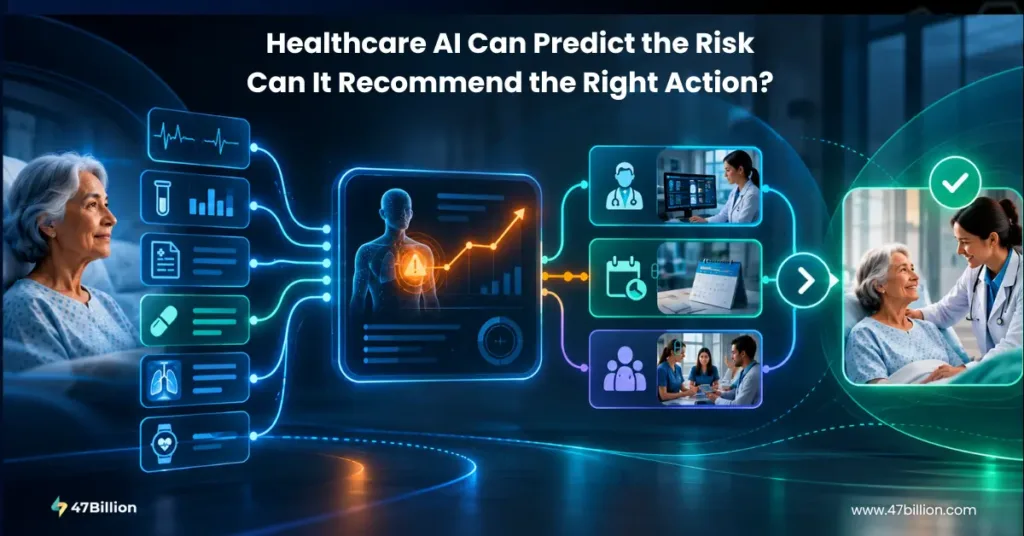
AI-driven systems:
- Analyze vitals, labs, and patient history
- Detect deterioration early
- Alert clinicians proactively
Outcomes:
- Faster interventions
- Reduced mortality risk
- Improved critical care efficiency
Automating the Discharge Workflow End-to-End
Discharges are one of the most coordination-intensive processes in hospitals.
AI agents help:
- Align discharge planning with real-time readiness
- Coordinate multiple departments
- Minimize delays
From Discharge Planning to Transport, Housekeeping and Bed Turnover
A coordinated discharge triggers:
- Pharmacy preparation
- Transport scheduling
- Room cleaning and readiness
- Bed reassignment
This transforms discharge from a manual bottleneck – synchronized workflow pipeline.
Predictive Maintenance of Hospital Equipment with AI
Hospital infrastructure depends on critical equipment uptime.
AI agents integrate with IoT systems to:
- Monitor device telemetry
- Detect anomalies
- Predict failures
IoT Telemetry, Anomaly Detection, and Automated Maintenance Scheduling
Capabilities include:
- Real-time equipment health tracking
- Predictive maintenance alerts
- Automated scheduling of servicing
Impact:
- Reduced downtime
- Fewer surgical delays
- Improved asset utilization
This is one of the most mature implementations of agentic behavior in healthcare today.
AI-Driven Hospital Operations Management: The Full Picture
The transformation is not about isolated use cases – it’s about building an intelligent operational layer across the entire hospital.
Building the Intelligent Operational Layer Across Clinical and Administrative Systems
An integrated system enables:
- Real-time operational visibility
- Predictive insights
- Coordinated execution
Hospitals evolve from:
- Fragmented systems
– Connected ecosystems
– Autonomous coordination layers
This shift defines next-generation hospital operations.
Governance, Trust, and Human-in-the-Loop Controls
Healthcare requires strict oversight.
AI systems must operate within:
- Human-in-the-loop frameworks
- Explainable AI models
- Regulatory and compliance boundaries
AI agents are designed to:
- Augment clinical decision-making
- Support – not replace – human expertise
Trust, transparency, and accountability remain non-negotiable.
How 47Billion Builds Agentic AI Systems for Health Systems?
At 47Billion, we believe AI creates value only when it is:
- Embedded into workflows
- Connected across systems
- Designed for real-world operational constraints
Our approach focuses on:
- Workflow-native agent design
- Multi-agent orchestration architectures
- Integration across EHR, IoT, and enterprise systems
We move beyond analytics to intelligent execution systems that:
- Sense operational changes
- Predict bottlenecks
- Coordinate responses
- Act in real time
The future is not more dashboards – it is continuous orchestration.